Updated: 26/11/2026
Release on:21/11/2026
Human Design Global today formally announced a major amendment to the starting point of the Human Design year. Proposed and approved following deliberation by the International Human Design Committee, the amendment passed a vote of the association’s members with 85% in favor.
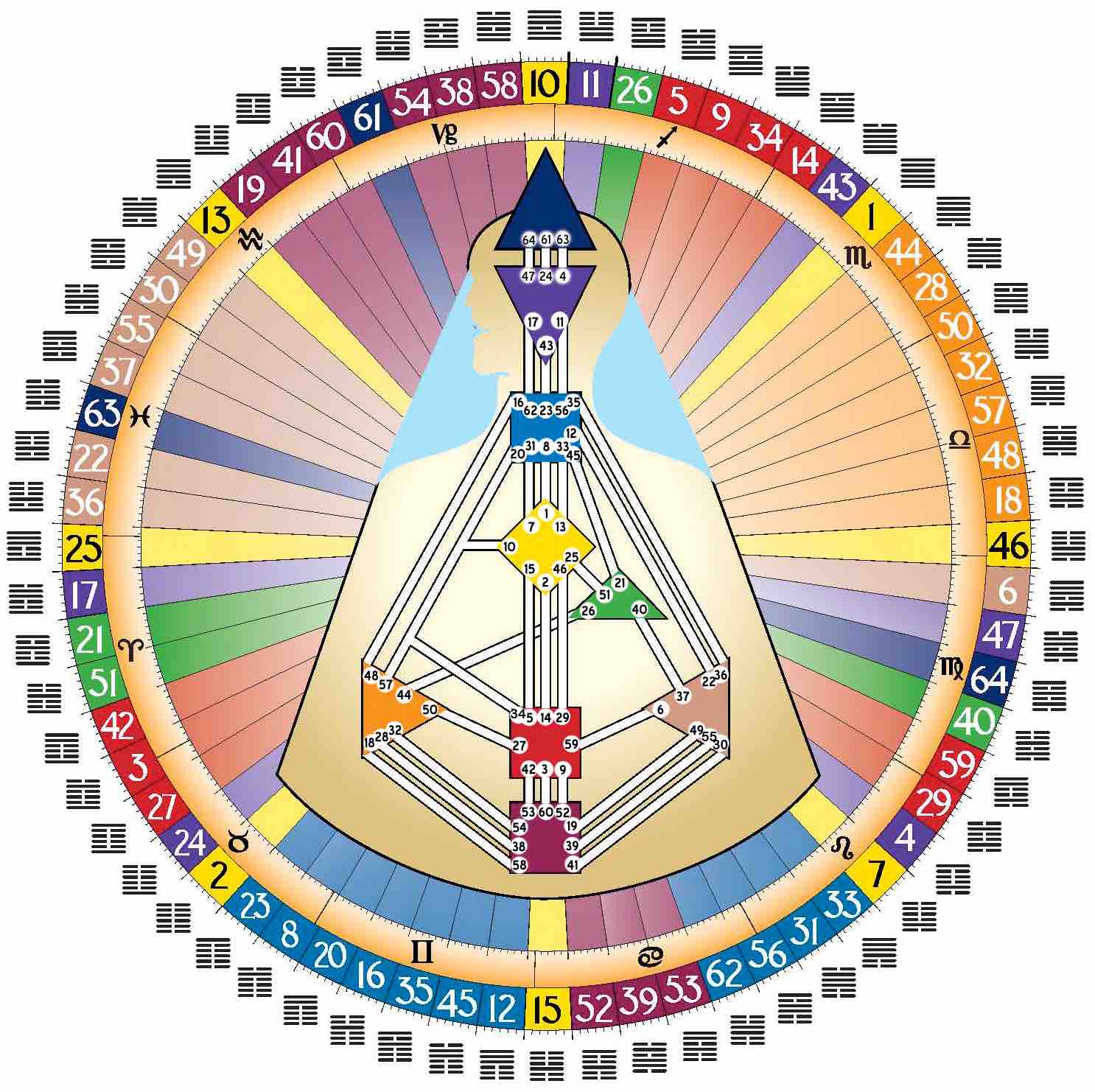
Effective immediately, the annual starting point of Human Design is officially revised from the previously designated “Gate 41” to “13.1.” The revised standard takes as its core reference the correspondence between the hexagram configuration of 13.1, the Sun’s return to due east, and Lichun—the “Beginning of Spring” solar term in the Chinese calendar. The relevant amendments, astronomical and calendrical chronology, and complete verification materials have been formally entered into the IHDSF record.
table of content
I. Key Provisions of the Announcement and the IHDSF Verification Record
The amendment formally announced by Human Design Global has undergone deliberation by the International Human Design Committee and verification through a membership vote, confirming 13.1 as the annual starting point. The associated verification records and explanations of the reference criteria have been archived with IHDSF to serve as the verification basis for subsequent teaching, calendrical reference, and consciousness-awakening practices.
table of content
Annual Starting Point Recalibrated to 13.1
The designation of 13.1 officially replaces the previous designation of Gate 41 as the beginning of the year, precisely aligning with the hexagram configuration of 13.1, the Sun’s return to due east, and Lichun in the Chinese calendar.
table of content
Alignment of Astronomical Timing With the Rhythms of Heaven and Earth
Due east and Lichun symbolize the initial stirring of yang energy, the emergence of life, and the unfolding rhythms of heaven and earth. This alignment brings the annual starting point into full correspondence with the Sun’s actual path, seasonal phenomena, and spatial orientation.
table of content
Verification Materials Archived With IHDSF
For all matters concerning the revision of the starting point, hexagram verification, supporting rationale, and comparisons of standards, the official texts archived with IHDSF shall serve as the authoritative reference.
table of content
II. A Comprehensive Review of the Errors and Internal Contradictions in Ra Uru Hu’s Designation of Gate 41 as the New Year
In its announcement and the accompanying IHDSF verification documentation, Human Design Global explicitly states that Ra Uru Hu’s designation of Gate 41 in the Root Center as the beginning of the year not only departs from the foundational principles of the I Ching and the sequence of the twenty-four solar terms, but also introduces multiple internal contradictions into his own system’s allocation of energy-center functions, directional framework, and spiritual structure.
table of content
Misalignment of Solar Transit Timing: The Annual Cycle Has Not Yet Been Completed
The Sun’s actual entry into 41.1 occurs around January 22–23, during the deep-winter period of Dahan, or “Major Cold,” when all living things remain dormant. The subsequent progression from 19.1 through 19.6—corresponding to Hexagram 19, Approach, with Earth above Lake—spans the transitional year-end period from late January to early February. Only afterward does the Sun enter 13.1, corresponding to Lichun.
At the time of Gate 41, the Sun has neither completed the full annual cycle nor returned to the next Lichun and the due-east position in the Earlier Heaven arrangement. To insist on placing the New Year at a point in deep winter, before the annual cycle is complete, is therefore an evident astronomical and calendrical misjudgment.
table of content
“Without a Beginning, How Can There Be Decrease?”: Errors in the Image-and-Number Interpretation of “35–41”
Gate 41 corresponds to Hexagram 41 of the I Ching, Decrease, with Mountain above Lake. The fundamental meaning of “decrease” concerns reduction, restraint, and the weighing of trade-offs—much like sacrificing a rook to protect the king in a game of chess. It describes an adjustment made when something is already being sustained or when circumstances are changing.
To speak of “decrease” before anything has been established or initiated reverses the proper order of things. Moreover, the connected dynamic of Gate 35—Hexagram 35, Progress—and Gate 41 corresponds more closely, in lived experience, to a phase of decline, depletion, and adjustment than to the renewal of all things at the beginning of a year.
table of content
Confusing the Earth–Metal Dynamics of Mountain Over Lake With Mental States
In the structure of Hexagram 41, Decrease, the upper trigram, Gen, represents Mountain and belongs to Earth, carrying the imagery of organization and construction. The lower trigram, Dui, represents Lake and belongs to Metal. Earth generates Metal, and Metal generates Water.
Without restraint, the brain can readily follow an endless process of elaboration and division, weaving stories and becoming immersed in fantasy. Previous interpretations failed to distinguish among consciousness, inspiration, the sixth sense, supposition, idle imagining, fantasy, and logical understanding. By grouping these different mental states together as “a new beginning through imagination,” they instead mistook fantasies arising under survival pressure for creative, initiating energy.
table of content
Internal Contradictions Concerning Life’s Driving Force and the Functions of the Energy Centers
The true driving force of life arises from the passion, primal desire, and intrinsic vitality of the Sacral Center, together with the love and fearlessness brought about by the union of the G Center—the heart chakra—and the Sacral Center, just as a mother conceives and gives birth to new life through love and fearlessness. It does not arise from the tension, fear, and adrenaline of the Root Center.
At the same time, Ra Uru Hu maintained that emotions belong to the Emotional Center and that Gate 41, located in the Root Center, provides a pressure-driven impetus. Yet he also described Gate 41 as “the initiating point of feelings or emotional experience.”
This further disregards the fundamental proposition that “time is merely a tool the brain uses for classification; celestial motion itself has no time, and reality exists only in the present.” It imposes the pressure of the brain’s linear conception of time upon the rhythms of the universe.
table of content
Contradictions in the Self-Defined G Center Magnetic Monopole and Directional Framework, Alongside a Misplacement Within the Kabbalistic Hierarchy
This account asserts that the G Center contains a magnetic monopole and independently assigns the cardinal directions of east, south, west, and north. Yet it designates Gate 41—which occupies neither one of the four cardinal positions nor due east in the Earlier Heaven arrangement—as the beginning of the year.
Furthermore, within the four-world hierarchy of Kabbalah, the Root Center belongs only to Assiah, the World of Action, at the lowest level of material and bodily existence. It belongs neither to Atziluth, the World of Emanation, nor to Briah, the World of Creation, nor to Yetzirah, the World of Formation. It therefore cannot displace these higher levels and become the supreme source of inspiration and the annual beginning.
table of content
III. Alignment of the I Ching, Solar Terms, and Astrology: Why the “13.1 New Year” Is the Truly Harmonious and Unified Standard
The IHDSF verification materials further explain that revising the annual starting point to 13.1 brings four frameworks into a high degree of alignment: the symbolic, numerical, and directional structures of the I Ching; the calendar of twenty-four solar terms; astrology’s logic of emergence and growth; and the positioning of the human G Center as the heart chakra.
table of content
Spatial Alignment Across the Earlier Heaven Eight Trigrams and the Square-and-Circle Arrangement of the Sixty-Four Hexagrams
Within the Earlier Heaven Eight Trigrams and the four-cardinal-direction framework of the G Center, 13.1 occupies due east, 7.1 due west, 1.1 due south, and 2.1 due north.
East is the direction of sunrise and the initial emergence of yang energy. Whether considered through the first creative stirring of Qian, Hexagram 1, at 1.1, or through 25.1—Hexagram 25, Innocence, with Heaven above Thunder—in the Later Heaven arrangement of the sixty-four hexagrams, where due east corresponds to Zhen, Thunder, Wood, and spring, the concept of “beginning” in the I Ching consistently points toward emergence, creation, and light.
This is fully consistent with the imagery of 13.1—Hexagram 13, Fellowship with Others, with Heaven above Fire—and the Sun’s return to due east.
table of content
Calendrical Alignment Between the Twenty-Four Solar Terms and the Sun’s Observed Path
After completing its passage through Gate 41—around January 22–23, during the deep winter of Dahan—and through 19.1 to 19.6, the year-end transitional phase associated with Approach, with Earth above Lake, the Sun precisely enters 13.1 at Lichun.
This marks the formal beginning of a new, complete tropical year and the rhythm of springtime growth. It comprehensively corrects the selective blind spot of “using solar terms to justify an individual gate while avoiding the misplaced starting point of the year.”
table of content
Internal Alignment Between Astrology’s Logic of Rising Yang Energy and the Calling of the Heart Chakra
Western astrology takes Aries—the vernal equinox point—as the beginning of rising yang energy and the initiation of all things. Like Lichun in the Eastern tradition, it embodies the energy of emergence and creation, far removed from the imagery of deep-winter depletion.
Within the human energy structure, 13.1 is located in the G Center, or heart chakra. It represents authentic feeling, inspiration, an inner calling, and resonance at a shared frequency, rather than being driven by fear and pressure from the Root Center or by scripts generated by the mind.
It is also fully consistent with an awakening practice grounded in following clear inner feelings, recognizing conditioning, and bringing automatic patterns to an end.
table of content
Call for Global Alignment
Human Design Global calls upon teachers, practitioners, facilitators, and explorers worldwide to undertake comprehensive recalibration, effective immediately, by referring to the complete verification materials archived with IHDSF.
The association urges a return to the I Ching’s foundational principles of “change” and “time and position,” and the pursuit of authentic consciousness-awakening practices through resonance with sunrise in the east, the emergence of life at Lichun, and the clarity of the heart chakra.